

Common
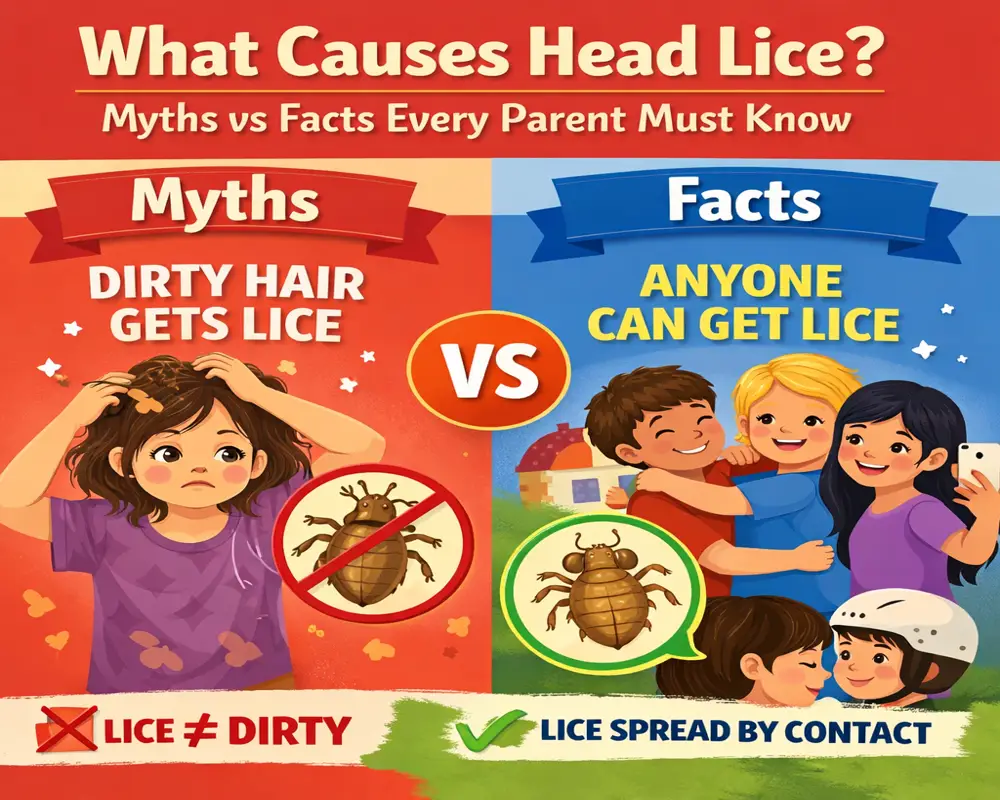
Myths About Head Lice (and the Facts)
Myth
1:
Only dirty hair gets lice
Fact: Lice don't care if hair is clean or dirty.
They need a warm scalp to survive and often move more easily on clean
hair.
Myth 2: Lice are linked to poor hygiene
Fact: Head lice affect children from all
backgrounds. They spread through contact—not cleanliness.
Myth 3: Lice can jump or fly
Fact: Lice cannot jump, hop, or fly. They crawl
slowly and spread mainly through close head-to-head contact.
Myth 4: Pets spread lice
Fact: Human head lice live only on humans. Pets
cannot transmit them.
So, What Really Causes Head Lice?
The primary cause of head lice is direct
head-to-head contact. This usually happens when children:
- Play closely
- Hug or sit close in class
- Share pillows during sleepovers
- Take selfies with heads touching
Lice don't appear on their own. They move from one head to another.
Does
Clean Hair Prevent Lice?
Short answer: No.
Long answer: Even daily hair washing won't stop lice because they are not attracted to dirt or oil. If your child has lice, it is not your fault.
Who
Is Most Likely to Get Head Lice?
While anyone can get lice, they are more common
in:
- Children aged 3 to 12 years, due to close play and
school interaction
- Children with longer hair, which increases
contact
- Families with multiple children, as lice spread easily at home.
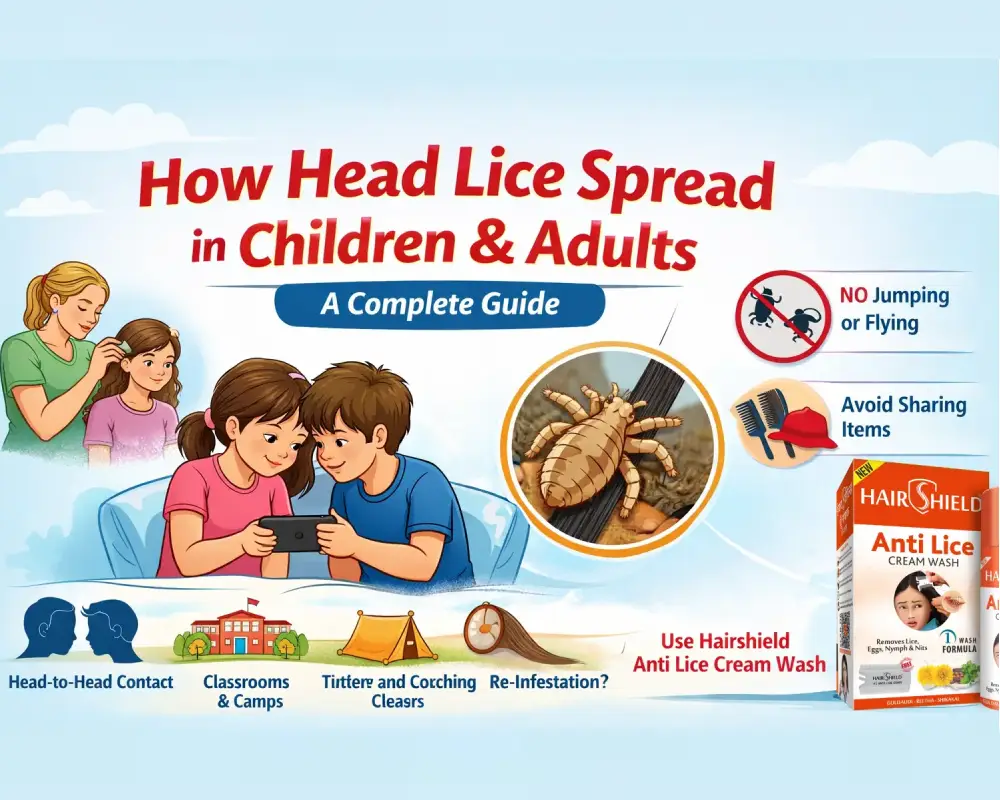
How Do Head Lice Spread?
- Direct
head-to-head contact (most common)
- Sharing personal items like combs, hats, hairbands, or helmets (less common)
Simple,
Practical Ways to Help Prevent Lice
No need to panic. Just build these habits:
- Teach children to avoid head-to-head contact
during play
- Avoid sharing combs, hair accessories, or
helmets
- Tie long hair in braids or ponytails
- Check the scalp once a week
- Use Hairshield Lice Specialist Comb regularly
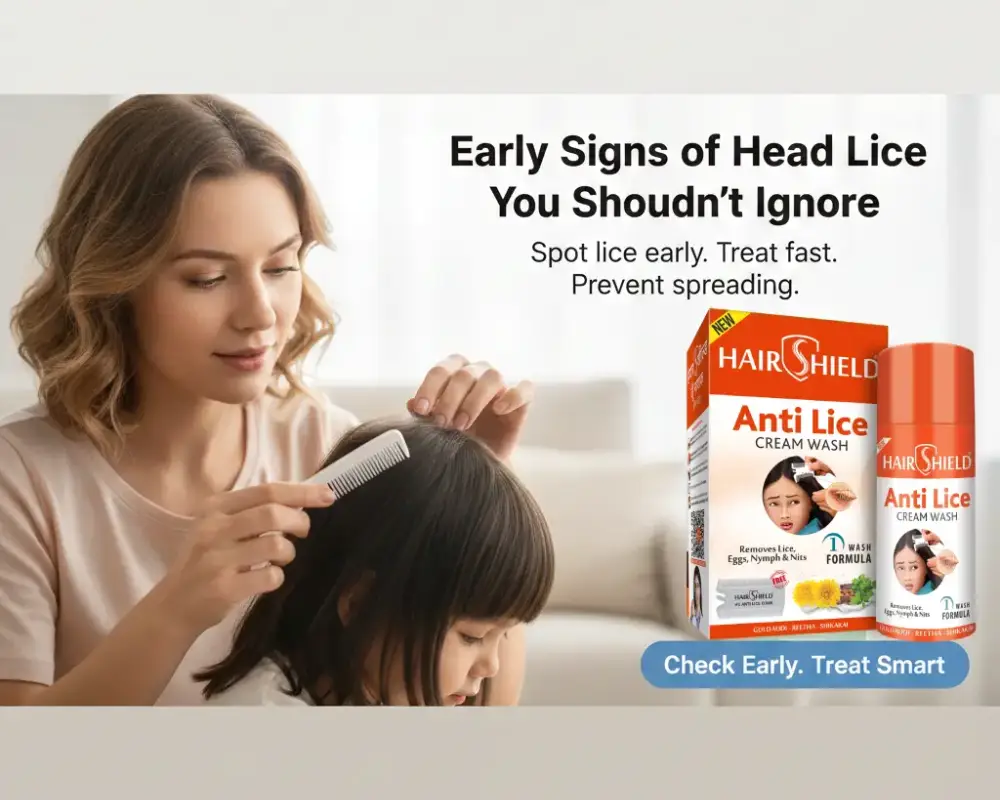
Early
Signs to Watch Out For
Early detection makes treatment easier. Look
for:
- Constant itching
- Tiny white eggs (nits) close to the scalp
- Small moving insects on the scalp
- Red marks or irritation from scratching
Choosing Gentle & Effective Care with Hairshield
Hairshield understands
how stressful lice can be for parents. Our child-safe and effective lice-care
solutions are designed to eliminate lice while being gentle on sensitive
scalps. This helps parents act quickly, confidently, and without fear.
A Final Reassuring Message for Parents
Head lice are normal, common, and manageable. They
do not define your hygiene, your home, or your parenting.
With the right information, a calm approach, and effective treatment, lice can be handled easily, and life can return to normal. Remember: awareness beats anxiety every time.
References
Centersfor Disease Control and Prevention (CDC) – Head Lice



 Home
Home
 WhatsApp
 Call Now