

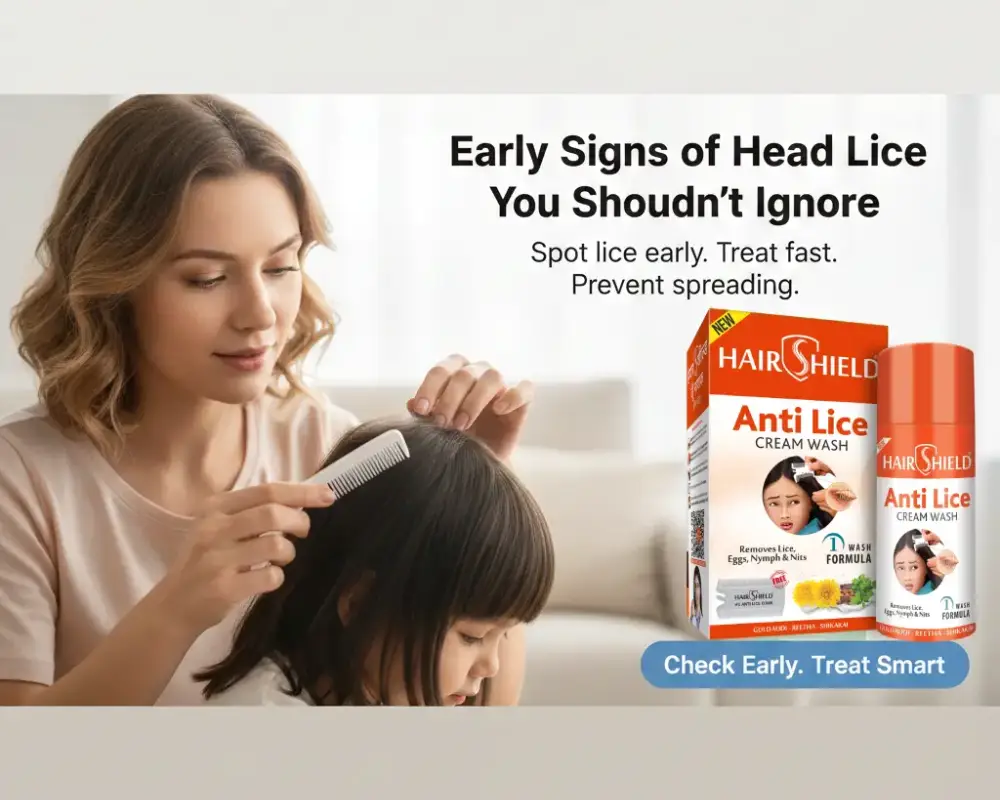
This
guide walks you through the early signs and symptoms of head lice so you
can act quickly and stop a full-blown infestation before it starts.
Itchy Scalp: The Most Common Early Sign of Head
Lice
For most
children, itching is the first noticeable symptom.
The
itching happens because lice bites cause a mild allergic reaction on the
scalp. Over time, this leads to irritation and discomfort.
You may
notice:
That
said, not every child starts itching right away. Some children can have head
lice for days or even weeks before any itching begins, so absence of
itch doesn’t always mean absence of lice.
Visible Nits (Lice Eggs) on the Hair
Nits are
lice eggs attached firmly to individual hair strands, close to the scalp.
They’re often easier to spot than live lice.
Nits may
look:
Unlike
dandruff, nits don’t fall off when you brush or shake the hair.
Check
these common areas carefully:
Spotting Live Lice on the Scalp
Live head
lice are small, quick, and difficult to see especially on dry hair.
They are
usually:
Using a fine-toothed
lice comb on wet, conditioned hair makes detection much easier and more
reliable.
Red Bumps, Scratches, or Sores on the Scalp
If lice
have been present for some time, constant scratching can lead to:
At this
stage, lice may have been there longer than you realised, and treatment should
start immediately.
Trouble Sleeping at Night
Many
parents notice sleep issues before spotting lice.
Lice tend
to be more active at night, which can cause:
If your
child suddenly starts complaining about an itchy scalp at night, it’s worth
checking.
A Tickling or Crawling Sensation on the Scalp
Some
children and adults describe a tickling or crawling feeling on the
scalp. While this sensation isn’t always caused by lice, it should never be
ignored especially, if itching or other signs are present.
How to Confirm Head Lice at Home?
The most
reliable way to confirm head lice is wet combing.
Here’s
how:
Wet
combing works far better than checking dry hair and is recommended by experts.
When Should You Start Head Lice Treatment?
Start
treatment immediately if you notice:
Using a
clinically trusted solution like Hairshield Anti Lice Cream Wash helps
eliminate live lice, loosen stubborn nits, and remove eggs effectively when
used correctly making early treatment faster and far less stressful for parents
and children.
How to Prevent Lice from Coming Back?
Once
treatment starts, prevention becomes just as important.
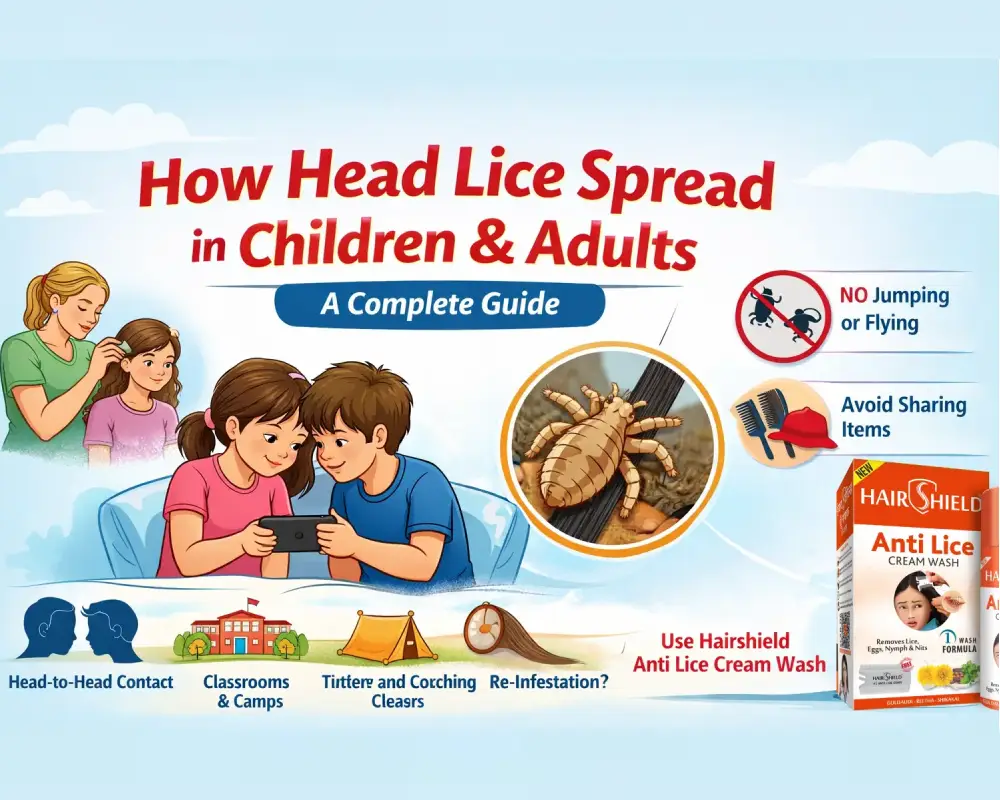
Understanding
how lice spread helps avoid re-infestation. You may find this helpful: (What Causes Head Lice? Myths vs Facts)
Regular
checks, especially for school-going children, can make a huge difference.
Final Thoughts for Parents
Head lice
don’t always show obvious symptoms right away. That’s why early signs matter,
and regular scalp checks are so important.
Staying
calm, acting early, and using the right treatment can stop lice from spreading and
turn a stressful situation into a manageable one.
You’re
not alone in this and yes, it does get easier 💛



 Home
Home
 WhatsApp
 Call Now